
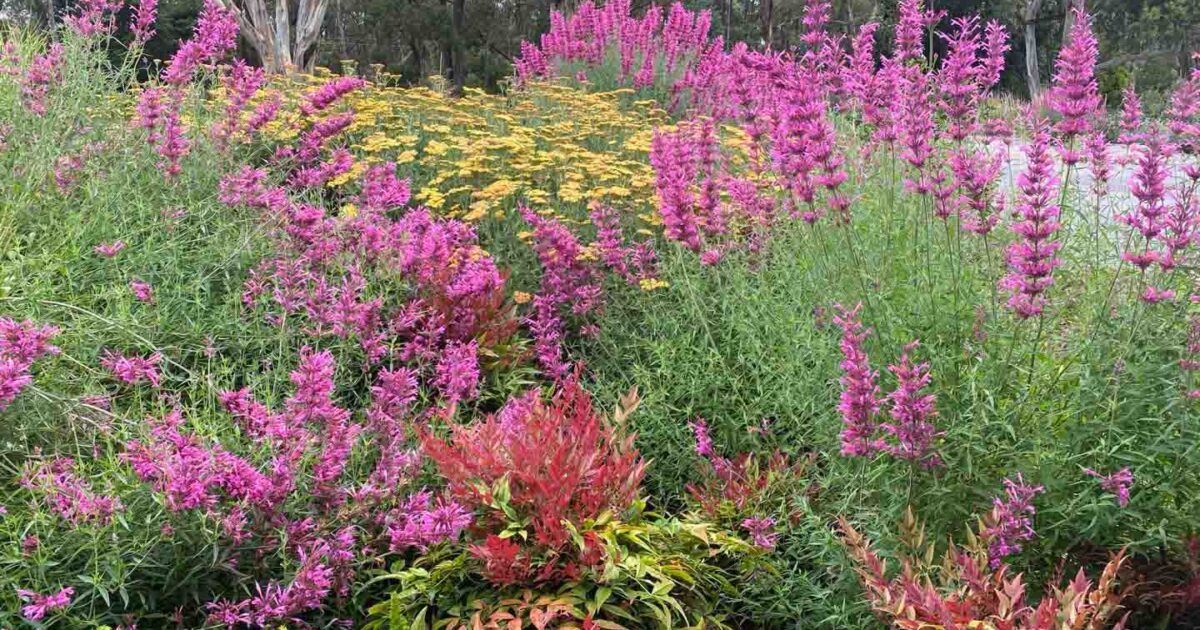
Frost, Clay and Wind. That’s the Reality in Ballarat.
Regional Victoria isn’t coastal Melbourne. Ballarat frosts sit heavy in winter. Clay soils hold water, then bake solid in summer. Wind moves across open blocks and exposes weak growth. If planting isn’t chosen for structure and durability, it shows within two seasons.
Low maintenance isn’t about neglect. It’s about selecting plants that hold form without constant correction. The right natives create a framework that lasts twenty years.
On recent regional designs like the Buninyong project, we’ve anchored corners with Banksia marginata, layered silver Westringia against brick, and allowed Poa to soften basalt edges. The result feels calm and structured.
The Layering Framework That Makes Natives Feel Architectural
Instead of creating a native garden like a collection. Think in structural systems. You can build in layers like this:
- Structural canopy 5 to 6 metres
- Framework shrubs 1 to 2 metres
- Flow layer grasses and repetition
- Ground plane weed suppressing cover
- Accent sculptural punctuation
Repetition matters more than variety. Silver next to deep green creates contrast. Upright forms anchor horizontal massing. Grasses soften hard material transitions. It has to make you wonder why more gardens aren’t composed this way.
Structural Anchor Trees That Carry the Garden
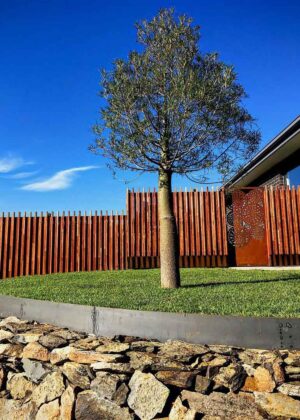
Banksia marginata
Height: 5 to 6m
Form: Upright, dense
Role: Corner anchor, gate framing, backdrop
This is one of the most reliable structural natives for inland Victoria. Frost tolerant. Clay adaptable. Its cones draw wattlebirds while the canopy creates filtered light for underplanting.
Design-wise, it steadies everything around it. Underplant with Lomandra or Dianella and the composition holds without pruning cycles.
Acacia melanoxylon
Height: Variable suburban form
Role: Backdrop canopy
Blackwood builds a deep green canvas behind lighter textures. It fixes nitrogen, which supports surrounding planting, and it tolerates heavier soils better than many exotics.
Used correctly, it creates shade structure that feels established from year five onward.
Callistemon ‘Kings Park Special’
Height: 2 to 4m
Role: Screening and colour rhythm
Dense, upright and frost hardy. The red brushes draw nectar feeders and visually punctuate brick or rendered walls. Unlike softer shrubs, it keeps its density in wind-exposed sites.
Framework Shrubs That Define Space
Westringia fruticosa
Height: 1 to 2m
Foliage: Silver-grey
This is where modern native design often begins. The silver foliage offsets corten steel and charcoal brick beautifully. It holds a tight shape without constant clipping and performs in frost and wind.
Used in repetition, it creates visual calm. That’s the difference between chaos and control.
Correa species
Height: 1 to 2m
Role: Understorey layering
Winter flowers feed birds when little else does. Frost tolerance makes it reliable in Ballarat pockets. Tucked beneath canopy trees, it softens the transition from tall to low planting.
Grevillea lanigera varieties
Height: 1 to 2m
Compact forms provide spider-like flowers that attract bees and small birds. Silver-green tones contrast deeper foliage layers. Placement matters though. Avoid exposed wind corridors where leggy growth can occur.
Flow Layer: Grasses That Soften Structure
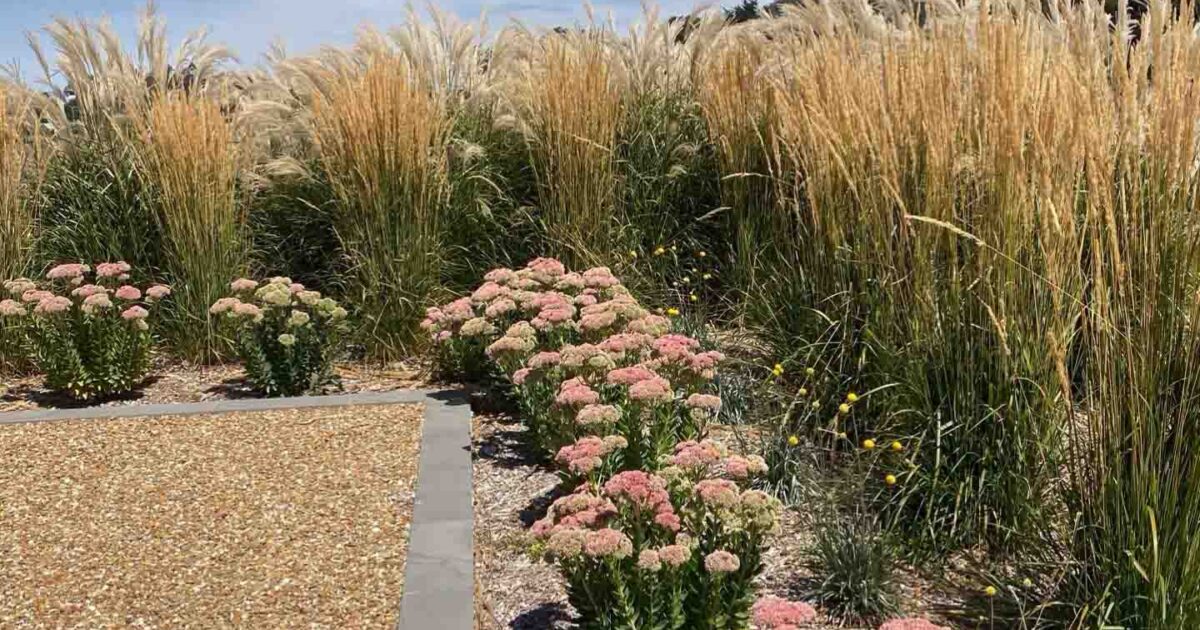
Poa labillardierei
Size: 1m x 1m tussock
Architectural but fluid. Poa stabilises slopes and visually softens hard edges like basalt or concrete. Mass planting reduces visible maintenance and suppresses weed establishment through density.
When repeated across a slope, it turns a constraint into movement.
Lomandra hystrix and dwarf forms
Height: 0.6 to 1m
Clay tolerant. Sun or shade adaptable. Dense root systems assist with soil structure and erosion control. On sloped Ballarat blocks, Lomandra can replace struggling lawn areas while still feeling clean and defined.
Groundcovers That Help Suppress Weeds
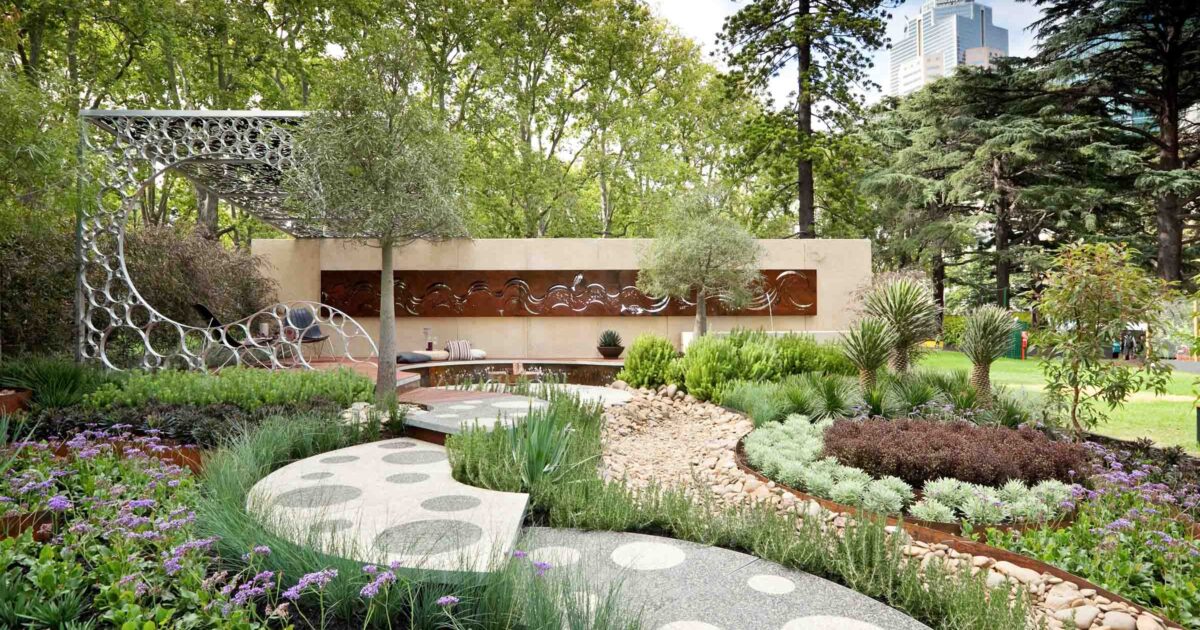
Myoporum insulare ‘Ground Hug’
Height: Around 10cm
Spread: Up to 4m
This is a genuine weed-blocking ground plane. Ideal for erosion control and large open sections beneath canopy trees. It reduces exposed soil and visually finishes the base layer.
Dianella caerulea
Height: 0.5m
Blue berries attract birds. Strappy foliage defines borders without becoming unruly. Excellent transition between lawn edges and mass planting.
Chrysocephalum apiculatum
Height: 30cm
Silver foliage and yellow button flowers add low-level colour rhythm. Pollinators respond strongly to this plant, making it both aesthetic and ecological.
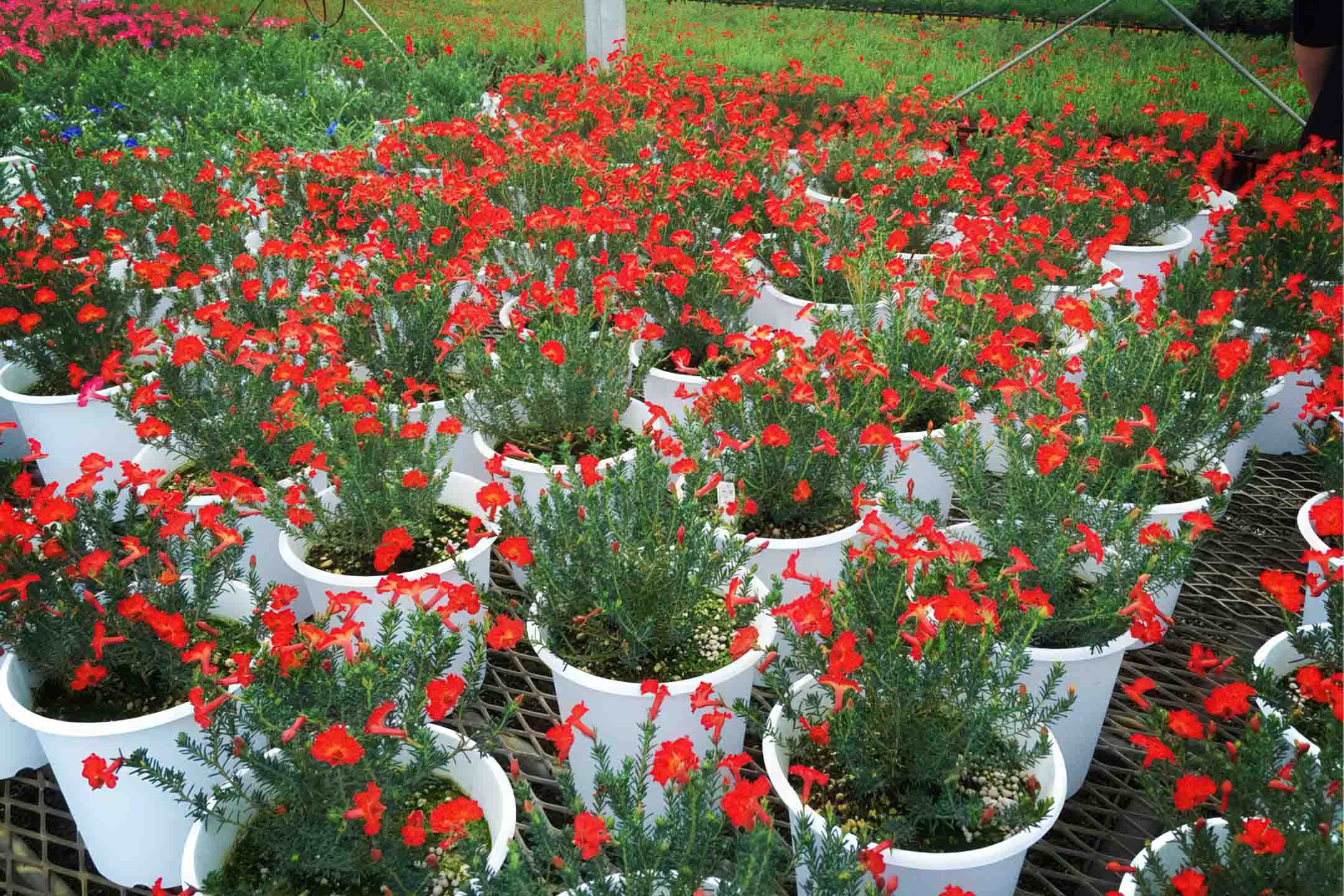
Accent Plants That Break the Horizontal
Craspedia globosa
Vertical stems topped with spherical yellow forms. Used sparingly, they interrupt horizontal planting and draw the eye through the space.
Eremophila silver foliage forms
Architectural foliage that pairs beautifully with deep green shrubs. Best used as highlight punctuation rather than mass planting.
How These Natives Support Soil and Wildlife
Dense planting reduces weed pressure naturally. Acacia species improve soil biology through nitrogen contribution. Grasses stabilise clay slopes. Groundcovers reduce erosion and moisture fluctuation.
Birds respond to Banksia, Correa and Callistemon nectar. Bees frequent Grevillea and Chrysocephalum. When layered correctly, the garden becomes habitat without looking wild.
What Doesn’t Hold Up in Ballarat Conditions
Soft Mediterranean shrubs in exposed frost pockets. Leggy Grevilleas in high wind corridors. Lavender in heavy clay without drainage correction. Plants that require constant shaping to look composed.
These fail quietly at first. Then suddenly.
Design Pairing Logic for Modern Regional Homes
- Corner Anchor: Banksia marginata + Lomandra base + Poa flow
- Modern Brick Frontage: Westringia hedge + Dianella edging + Craspedia accents
- Sloped Block: Blackwood canopy + Correa understorey + Myoporum ground plane
The height transition matters. 5m to 1.5m to 0.5m to ground cover. When stepped correctly, the garden feels intentional and low effort even though it’s strategically layered.
Small Yard Strategy in Regional Victoria
You don’t need acreage for structure. One carefully positioned canopy tree can frame a small block. Layer beneath it with two repeating shrub species. Add one grass mass. Finish with a dense ground plane.
That’s often enough.
Clarifying the Practical Decisions Behind Layered Native Design
Can Westringia or Lomandra replace lawn on slopes?
Yes. Both provide erosion control and visual cohesion while reducing mowing and irrigation demands.
What native plants thrive in Ballarat frost and clay without constant pruning?
Banksia marginata, Westringia fruticosa, Lomandra varieties and Poa labillardierei consistently hold form in frost-prone clay soils.
What are the best natives for weed suppression and bird attraction in small yards?
Myoporum for ground suppression, Lomandra for density, and Correa or Callistemon for bird-attracting flowers.
How do layered natives create modern structure around brick homes?
Silver foliage against brick provides contrast. Upright structural trees frame architecture. Repetition of mid-layer shrubs creates rhythm and calm.
Design First. Plant List Second.
Plants are tools. The structure behind them is what determines whether your landscape still works in years to come.
If you’re building or renovating on a frost-prone clay block in Ballarat or Buninyong, the difference is not just about the species. It’s also about the way they’re layered, repeated and anchored.
Book a site consultation to map your native framework properly. Start your regional Victoria design consultation here.