Summary
On a narrow 30sqm garage roof in Albert Park, Paal Grant Designs transformed a constrained urban site into a sculptural, multi-level entertaining retreat using curved corten steel seating, layered planting, and a sunken conversation pit. Featured in Backyard: Creative Australian Living (Edition 8, 2016) and photographed by Patrick Redmond, the project demonstrates how intelligent spatial choreography and climate-responsive planting can turn Melbourne rooftops into resilient, low-maintenance sanctuaries.
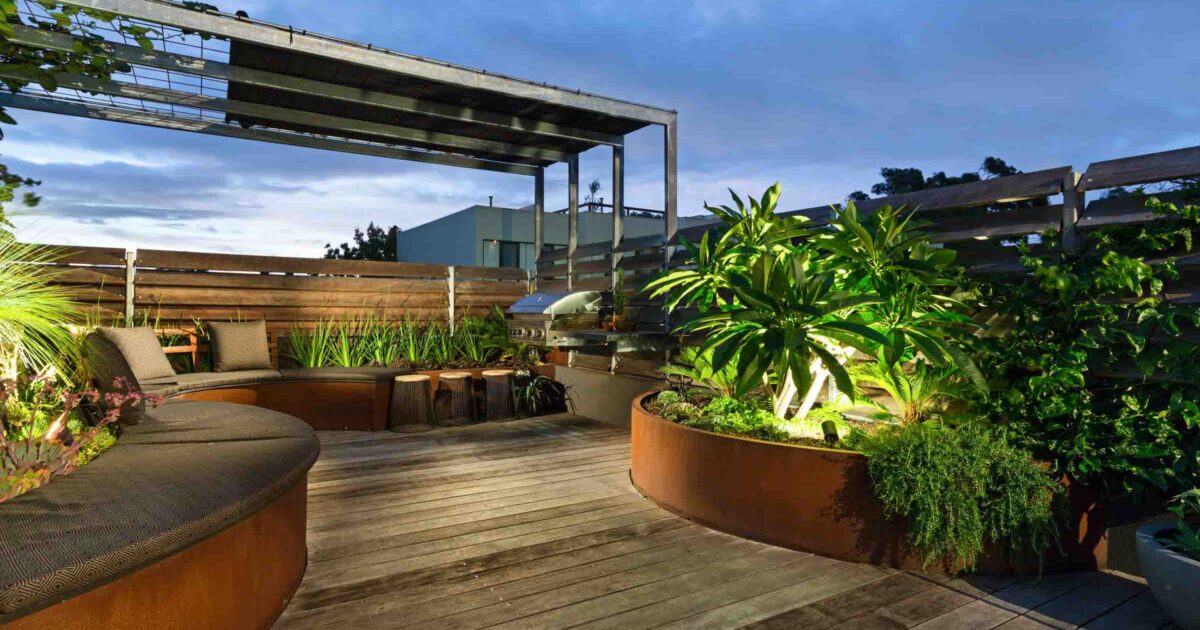
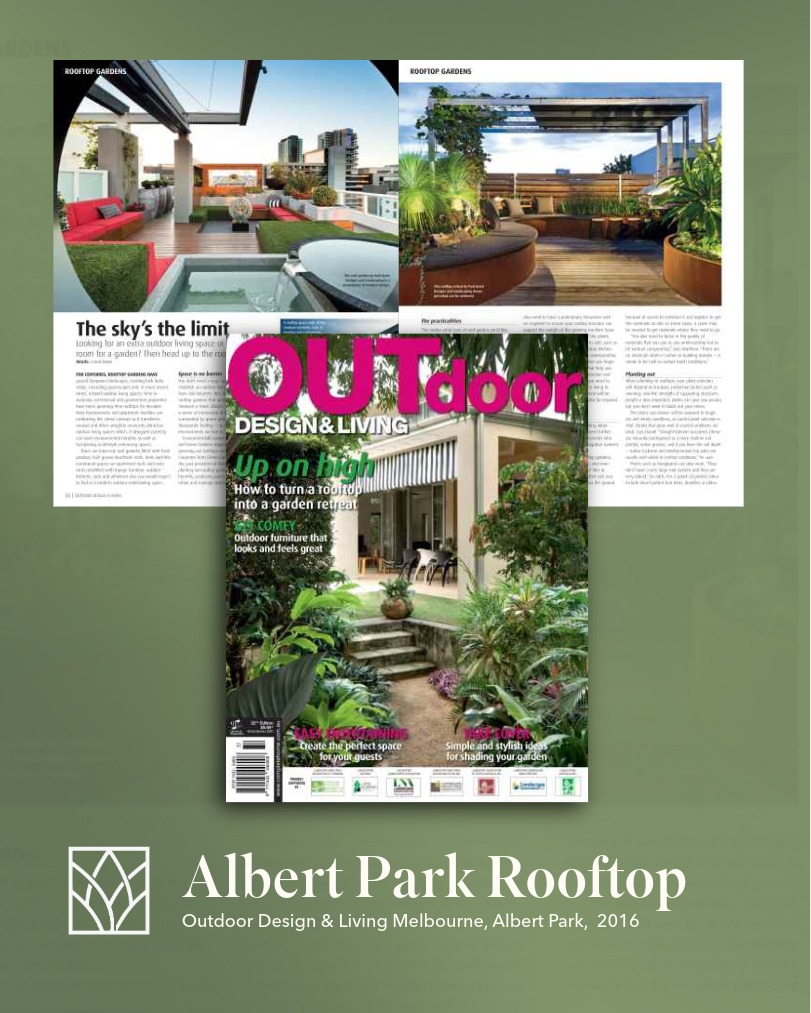
Outdoor Design & Living Magazine, 2015
Urban Oasis, Author Rebecca Gross, 2015



A Roof, Not a Backyard
The clients, an engineer and a fashion designer, didn’t have a ground-level garden to transform.
They had a roof.
Thirty square metres above a garage. Wind-exposed. Visible from neighbouring properties. Limited load capacity. No room for visual mistakes.
They wanted refuge from the pace of the inner city. A place to entertain. A space that felt generous, not compromised.
The challenge wasn’t styling.
It was perception.
Curves That Expand Space
Straight lines would have reinforced the narrowness.
So we avoided them entirely.
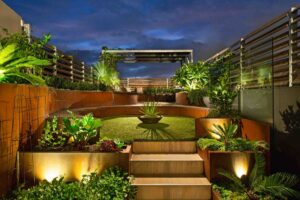
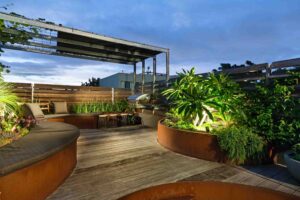
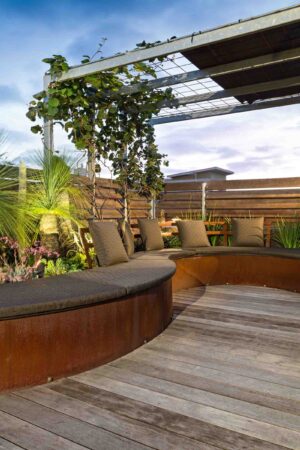
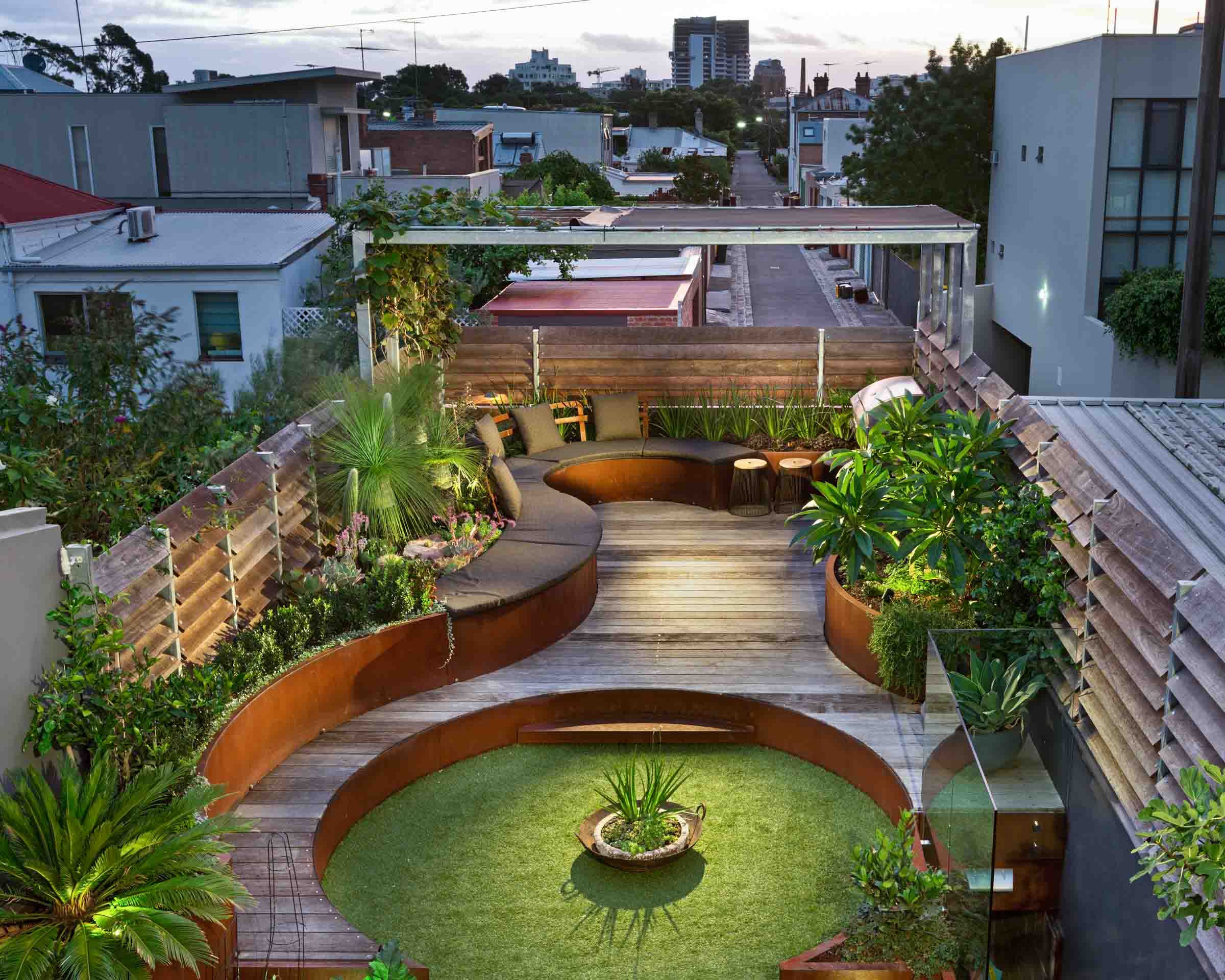
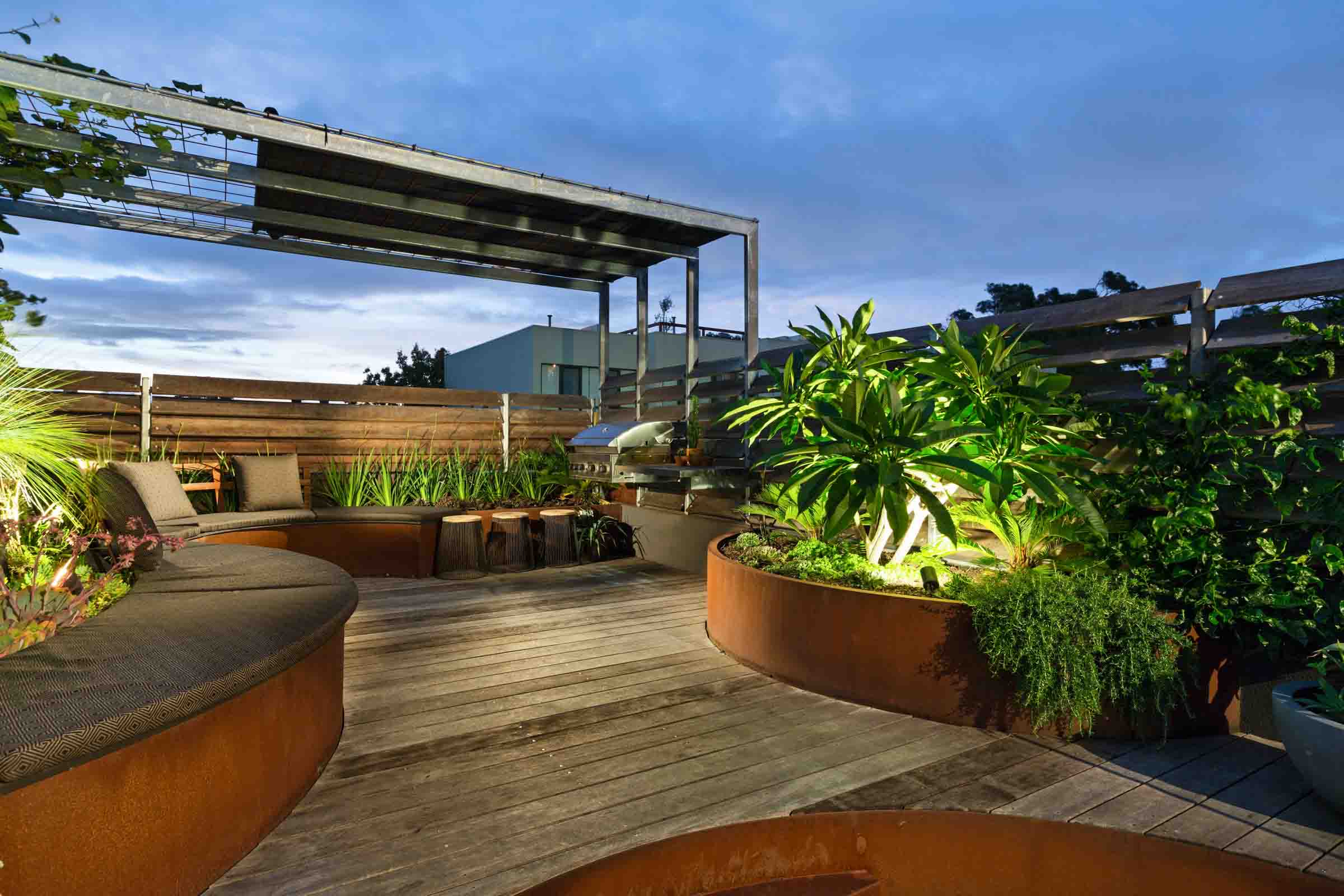
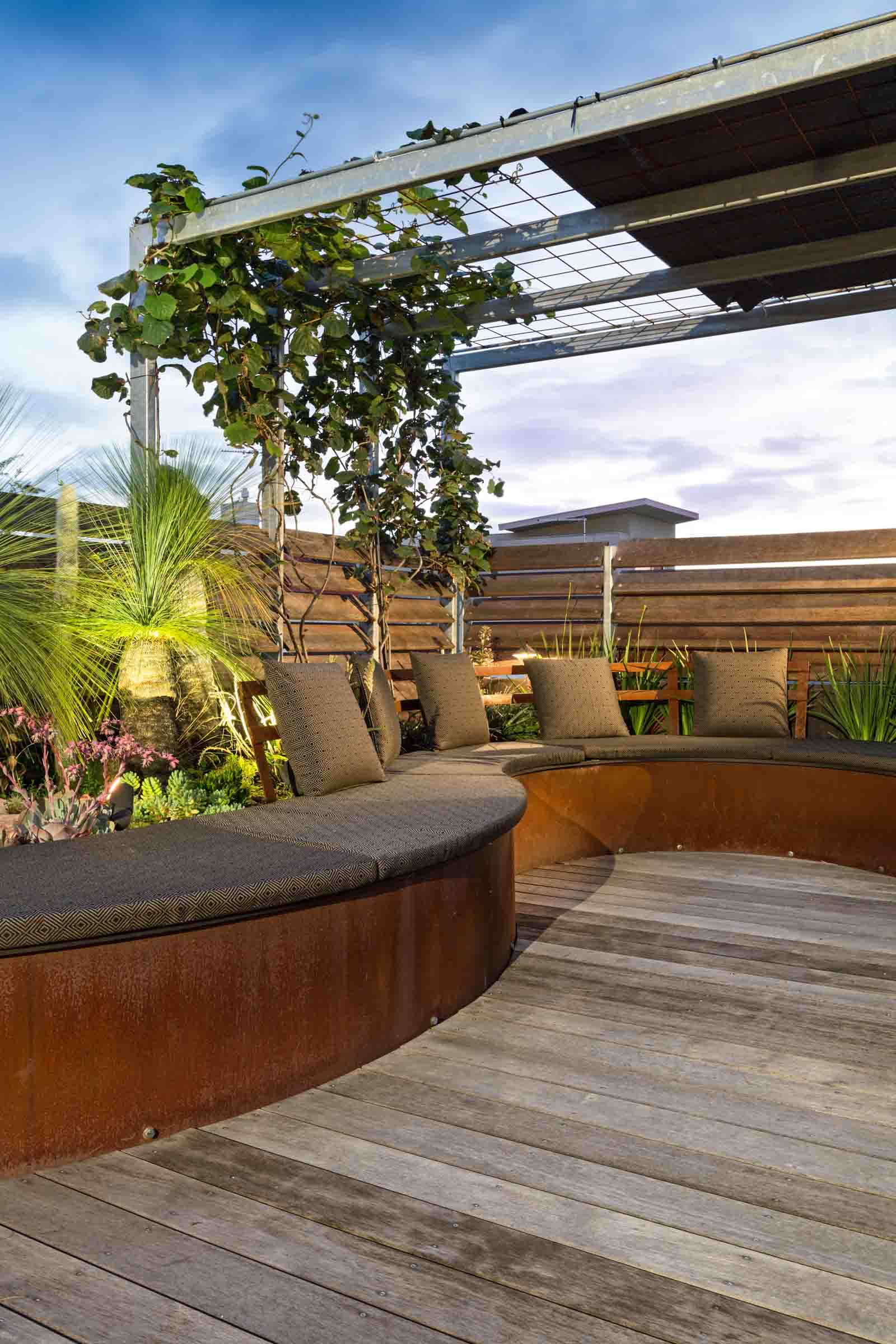
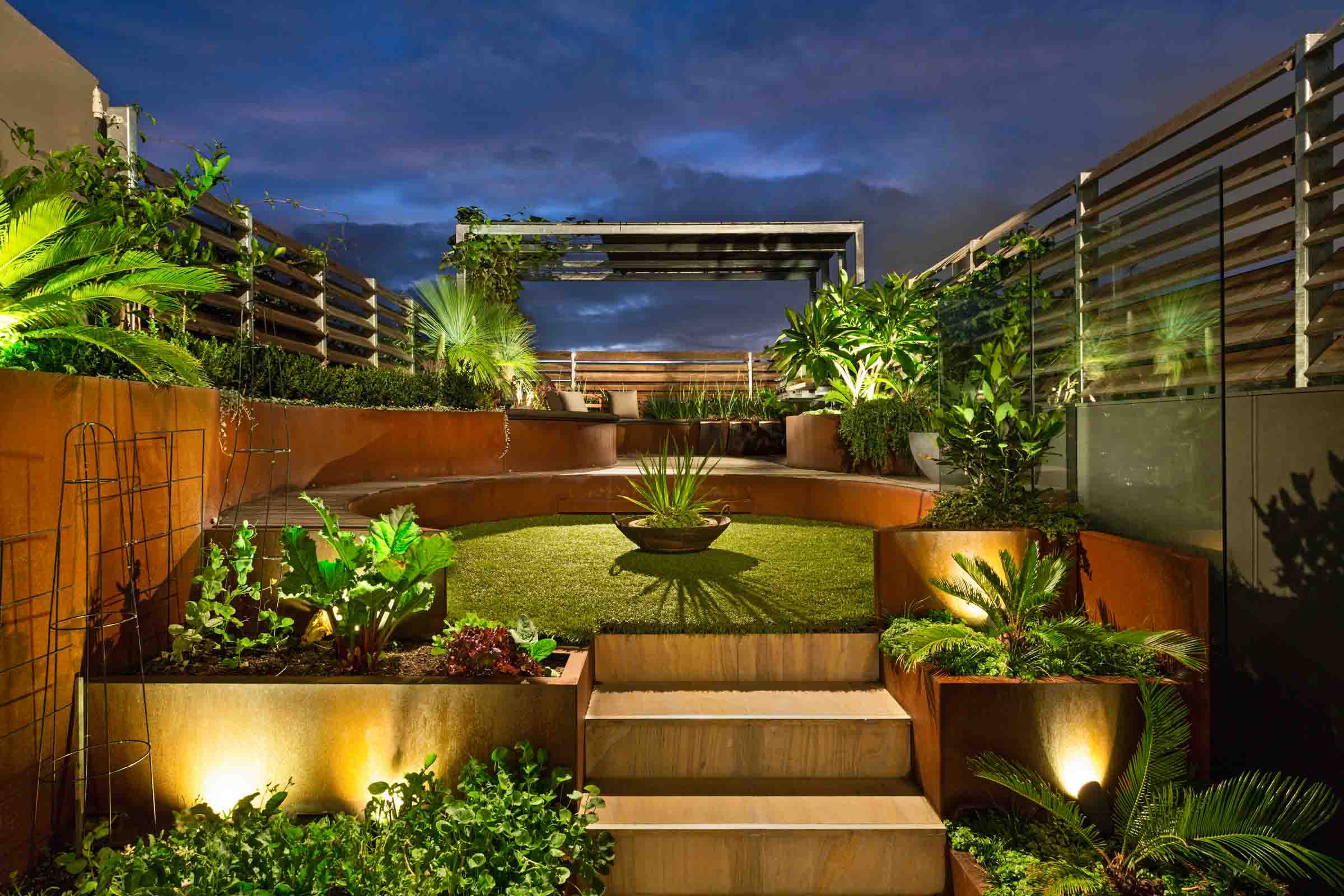
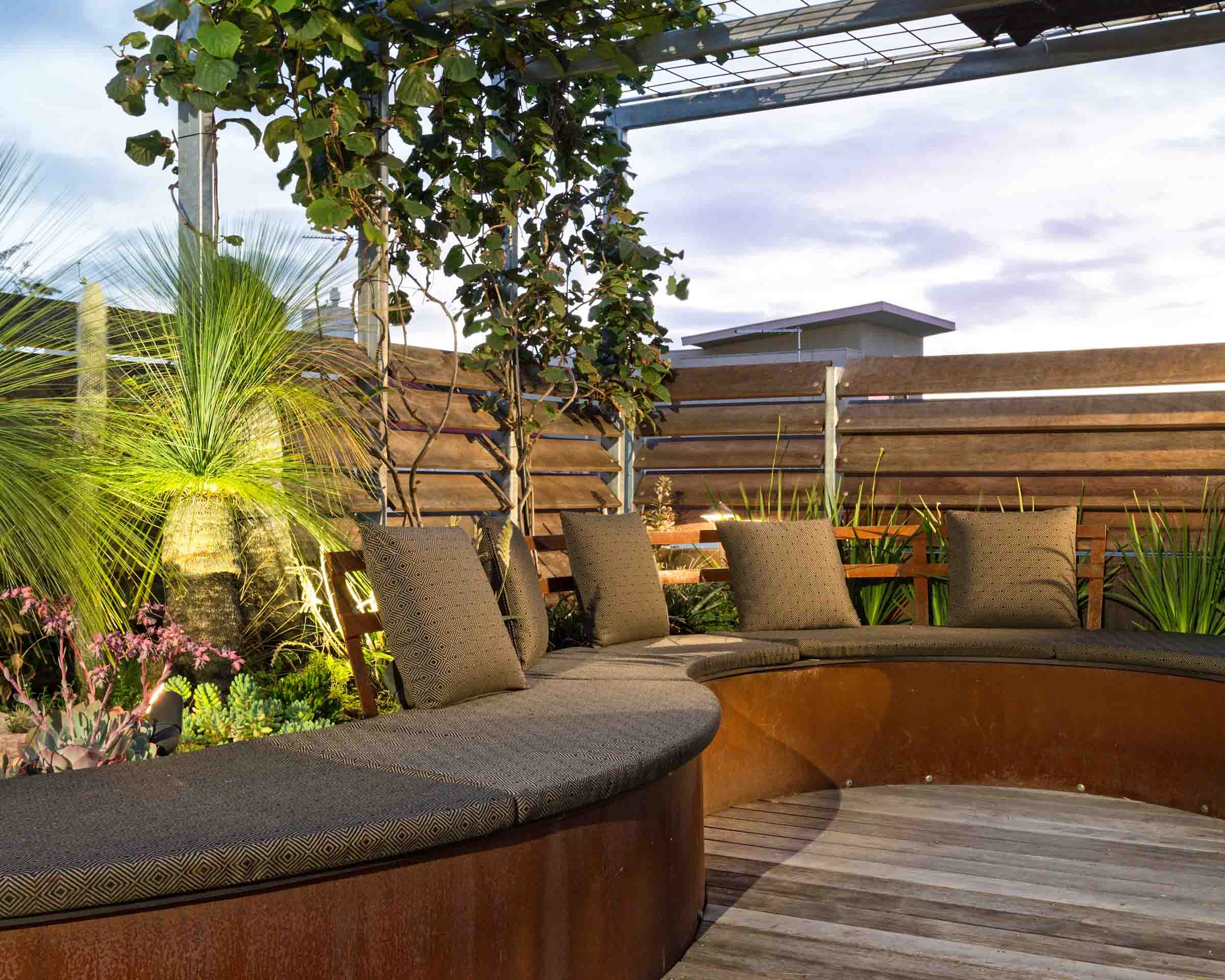
A sweeping corten steel wall folds through the terrace, morphing into integrated seating. Rounded planters dissolve into benches. Levels shift subtly. Three steps descend into a circular conversation pit, not as nostalgia, but as spatial strategy.
Curves distract the eye from boundary lines.
Level changes create depth.
Movement replaces confinement.
The terrace feels larger than its footprint because the eye never meets a hard stop.
This is what we mean by intelligent design, form responding to constraint.
The Conversation Pit, Social Choreography
At the centre sits a sunken circular lounge wrapped in corten steel.
Descending into the space changes behaviour immediately. Guests settle. Conversations deepen. The surrounding timber screening and layered planting create psychological enclosure without eliminating openness to sky.
It’s intimate, but not enclosed.
The synthetic turf underfoot softens the structure. A central planted feature becomes both focal point and anchor. Elevated deck seating above allows guests to perch or recline, creating multiple social postures within one compact footprint.
Small sites demand behavioural clarity.
This one delivers it.
Layered Planting Above the City
Rooftop gardens are unforgiving environments.
Heat radiates upward from the structure below. Wind accelerates across exposed edges. Irrigation must be carefully managed. Weight allowances restrict soil depth.
Planting had to perform.
Succulents handle exposure and reflected heat. Herbs and compact edibles introduce abundance without heavy root mass. Fruit trees and mixed natives soften structure while remaining manageable. A pergola supports deciduous vines, filtering harsh summer light and opening to winter sun.
The planting is eclectic by intention.
It blurs the boundary between structured architecture and living softness.
And it matures beautifully.
Engineering Without Drama
Rooftop projects demand discipline.
Drainage layers, weight distribution, structural coordination, waterproofing, every element must be resolved before aesthetics enter the conversation. The curved corten forms weren’t simply sculptural gestures; they were fabricated to precise tolerances, ensuring both strength and longevity.
Corten steel was chosen not for trend, but for performance. It weathers. It stabilises. It improves with time.
Integrated lighting was embedded within structure, allowing the terrace to transition from day retreat to evening entertaining without additional clutter.
Nothing here is accidental.
Everything is doing double duty.
From Underused Roof to Layered Entertaining
Before construction, the roof was visual noise. Afterwards, it became a sequence:
Arrival.
Descent.
Gathering.
Dining.
Lounge.
Multiple micro-zones within thirty square metres. The perception of fifty. That transformation, from constrained to generous, is the project’s true achievement.
Performance Over Time
Nearly a decade on, the corten has deepened in tone. The vines filter summer heat. The planting has thickened into enclosure. The terrace functions as intended, resilient, low-maintenance, and socially alive.
That longevity matters.
A rooftop garden must be an asset, not a liability.
A Note From the Studio
The Albert Park Rooftop has been documented across Australian design press and captured through Patrick Redmond’s lens, not because it was decorative, but because it solved something difficult.
The curves, the layered planting, the sunken lounge, they photograph beautifully.
But they exist because the structure demanded clarity.
Rooftop work doesn’t allow shortcuts.
You can’t ignore wind or overload soil. And you can’t hide poor detailing.
Albert Park reaffirmed something we’ve long believed. Constraint doesn’t limit design. It sharpens it. If you’re working with a narrow lot or exposed roof, the starting point isn’t planting. It’s reading the site properly.
- Assess the structure.
- Understand the exposure.
- Then design with intent.
Begin with a consultation. We’ll assess structure, exposure, and potential, before drawing a single curve. If you’re curious what your rooftop could become...
This Property has been featured in...